Jura Service Business App
.jpg)
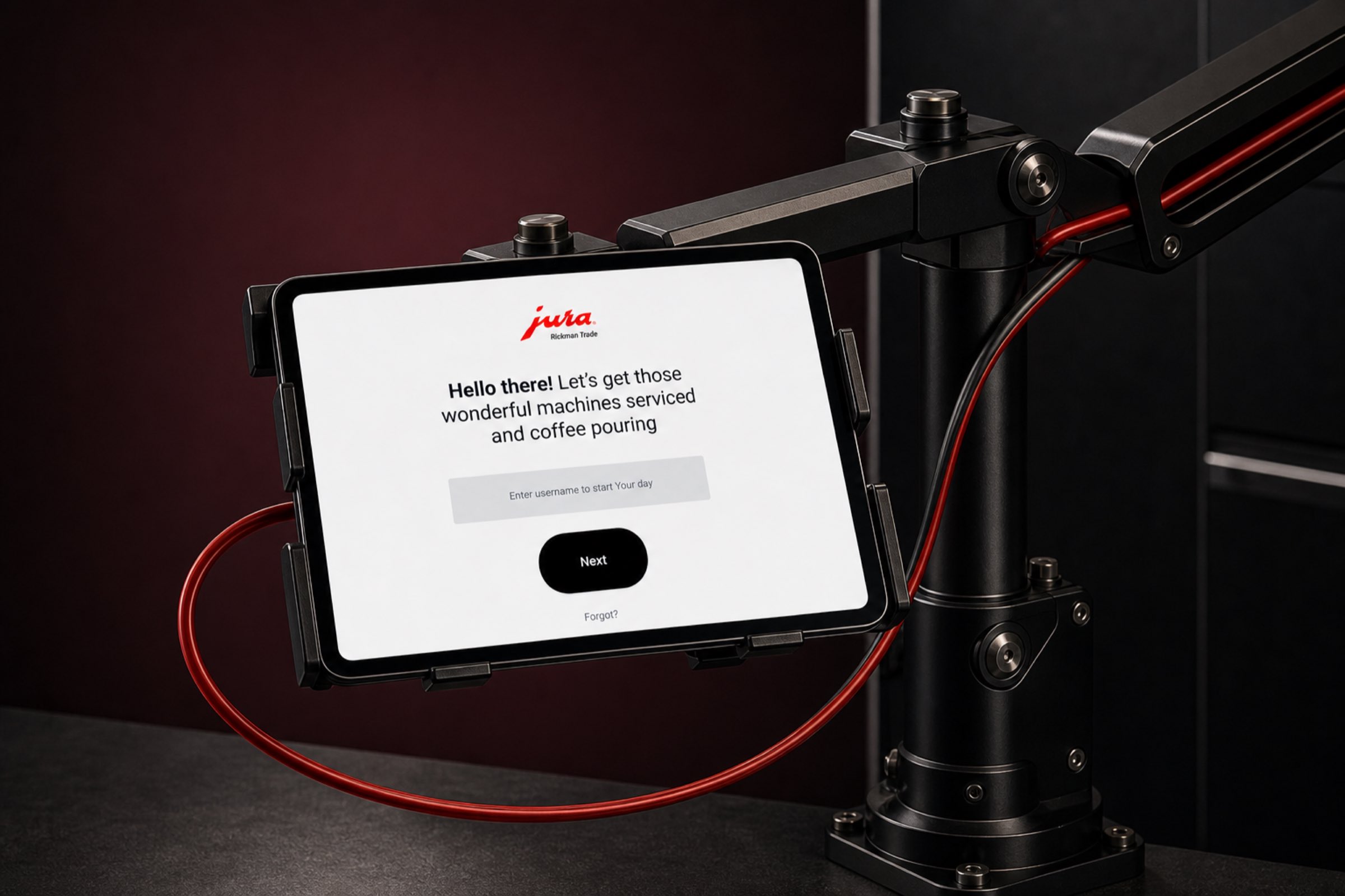
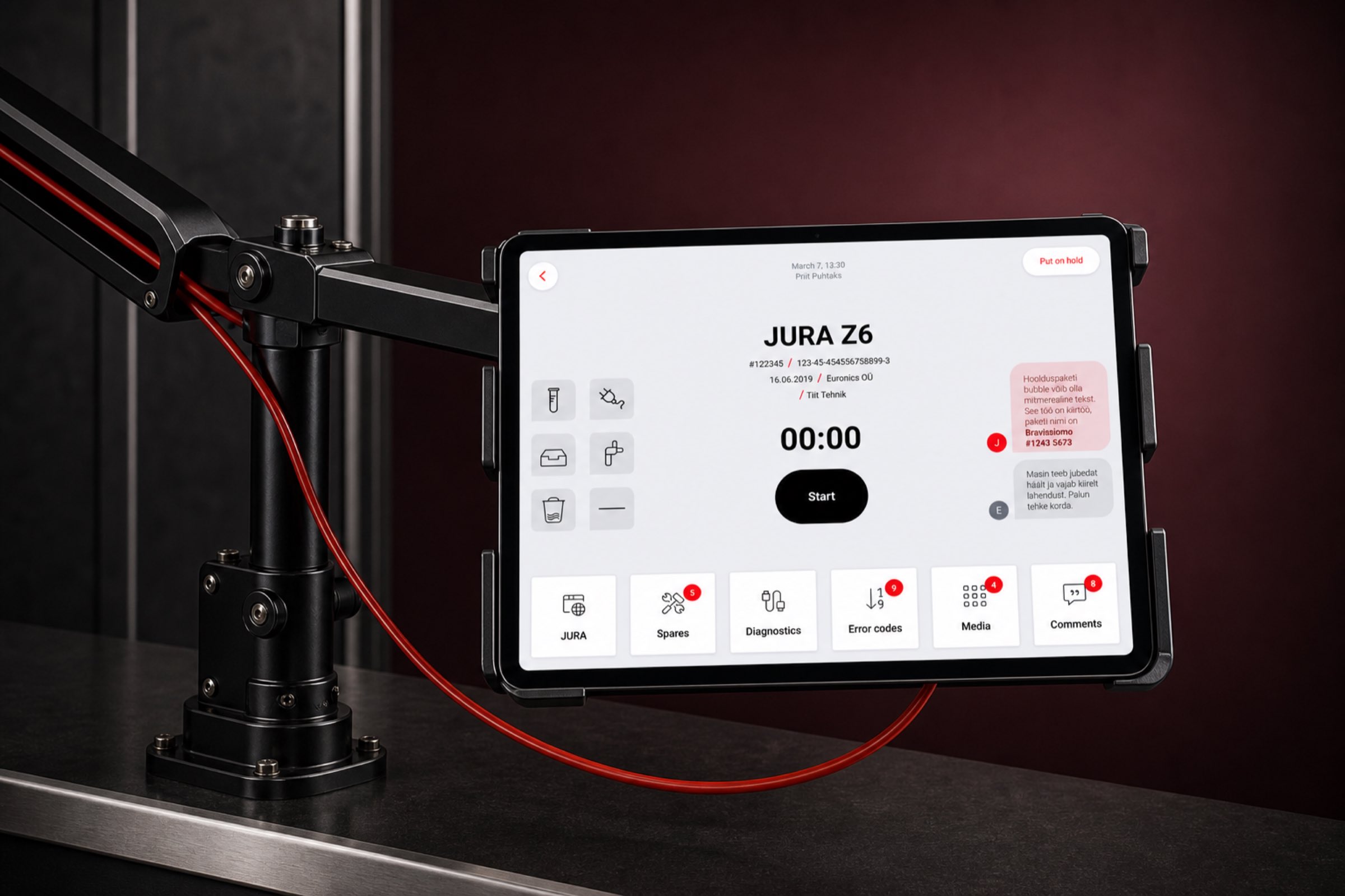
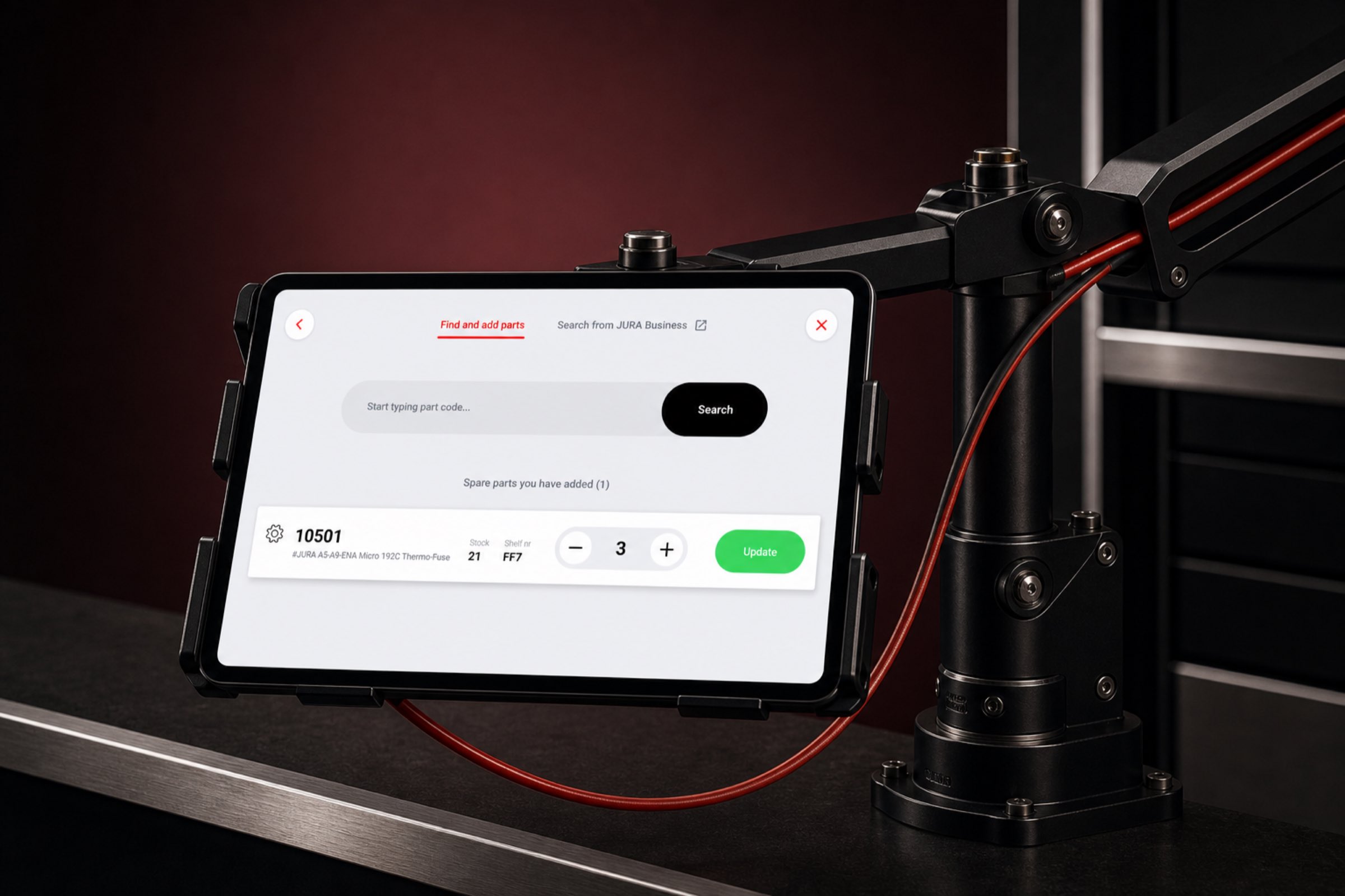
Premium brands are not built on products alone.
They are built on consistency, precision, and the quality of every customer interaction behind the scenes.
For JURA and Rickman Trade, service operations play a critical role in maintaining that standard.
The challenge was ambitious: redesign and digitalize the entire maintenance workflow behind JURA’s high-end coffee machines, transforming hand-drawn operational concepts into a fully functioning internal platform used daily by service technicians.
The objective was simple to describe, but far more difficult to execute:
Increase efficiency. Reduce human error. Improve workflow speed. Create a service experience worthy of the JURA brand.
The challenge
Before the transformation, many operational processes relied heavily on manual workflows and fragmented systems.
Rickman Trade, recognized globally as one of the strongest JURA branches and awarded best JURA branch worldwide on three separate occasions, already had a strong vision for improving operations internally.
The foundation existed in the form of hand-drawn concepts and operational ideas.
What was needed was a complete digital translation of that vision into a scalable, production-ready system.
This meant rethinking how technicians, managers, support teams, and operational data interacted across the entire maintenance process.
The system needed to feel effortless for technicians in the field while maintaining the precision and reliability expected from a premium Swiss brand.
Research before interface
Xfiner began with an extensive discovery and research phase.
The team worked closely with technicians, operational managers, and support personnel to understand the realities of the day-to-day workflow in detail.
The goal was not to design software in isolation.
The goal was to understand:
- Where time was being lost
- Where human error occurred
- Which workflows created friction
- How technicians actually operated in real-world service situations
- Which operational improvements would generate the greatest efficiency gains
This process laid the groundwork for a system designed around actual user behavior rather than assumptions.
Translating Swiss precision into UX/UI
The design philosophy closely reflected the qualities associated with JURA itself:
- Simplicity
- Elegance
- Precision
- Reliability
The interface was designed specifically for real operational use on iPads, where speed, clarity, and usability directly impact service performance.
Every interaction was refined through iterative design cycles and testing to ensure technicians could move through workflows naturally, without unnecessary complexity or confusion.
The result was an interface that balanced operational depth with visual clarity, helping teams work faster while maintaining confidence in every action.
From concept sketches to a live operational platform
The project evolved from rough hand-drawn ideas into a fully functioning production system through close collaboration between Xfiner and BCS Itera.
Xfiner focused on:
- UX/UI design
- Front-end development
- API layer integrations
- Workflow logic from the operational perspective
BCS Itera handled the back-end infrastructure and technical implementation layer.
Together, the teams delivered a purpose-built iPad application designed specifically for JURA’s maintenance operations.
Built on top of Microsoft Business Central
One of the most important architectural decisions behind the platform was separating operational usability from ERP complexity.
The live system operates as a custom business frontend built on top of Microsoft Business Central.
Business Central functions as the source of truth for operational data, while the app itself contains dedicated workflow logic, interfaces, and operational functionality tailored specifically for service teams.
The integration layer includes complex API connections that allow technicians and operational teams to work inside a highly optimized environment without compromising ERP data integrity.
This approach gave teams the flexibility and usability of a custom-built operational tool while still maintaining centralized business control and data consistency.
The outcome
The introduction of the custom internal platform transformed how service operations were handled.
The impact was immediate across multiple areas:
- Faster maintenance workflows
- Reduced human error
- Improved technician efficiency
- More structured operational processes
- Higher service profitability
- Better overall service consistency
Most importantly, the system helped align operational execution with the premium standards associated with the JURA brand itself.
A digital transformation behind the scenes
Customers rarely see the operational systems behind premium service experiences.
But those systems often determine whether excellence can scale consistently.
This project demonstrated how thoughtful UX/UI design, operational research, and custom internal tooling can dramatically improve efficiency inside complex service organizations.
For Xfiner, it also became an early example of designing purpose-built business operations interfaces on top of existing ERP systems long before “AI-powered internal tools” became an industry trend.
Services involved
- UX/UI Design
- Frontend Development
- Backend Development
- Internal Tools
- API Integrations
- Operational Workflow Design
Related links
For related context, see Talk to us, jura.ee, European Design Award Silver, rickman.eu, AI-powered internal tools and automation, ICP-led web design, Xfiner showcase, and Xfiner.