Duct Tape Files: The Hidden Workflows, Excel Hacks and Operational Chaos Inside Growing Companies
.jpg)
.jpg)


The spreadsheet was supposed to be temporary.
So was the manual export.
So was the Slack approval process.
And the employee who “just knows how the integration works.”
Then five years pass.
Nobody notices because operations still move. Orders still leave warehouses. Reports still reach finance. Customer emails still get answered.
The company continues functioning, which creates a dangerous illusion:
“If it still works, it cannot be that bad.”
That sentence quietly creates some of the most expensive operational environments in modern business.

The hidden operating system inside modern companies
Most companies do not run purely on their ERP anymore.
Operationally, they run on a second system layered around it.
Usually built from:
- spreadsheets
- exports
- browser tabs
- Slack messages
- disconnected approvals
- copied supplier data
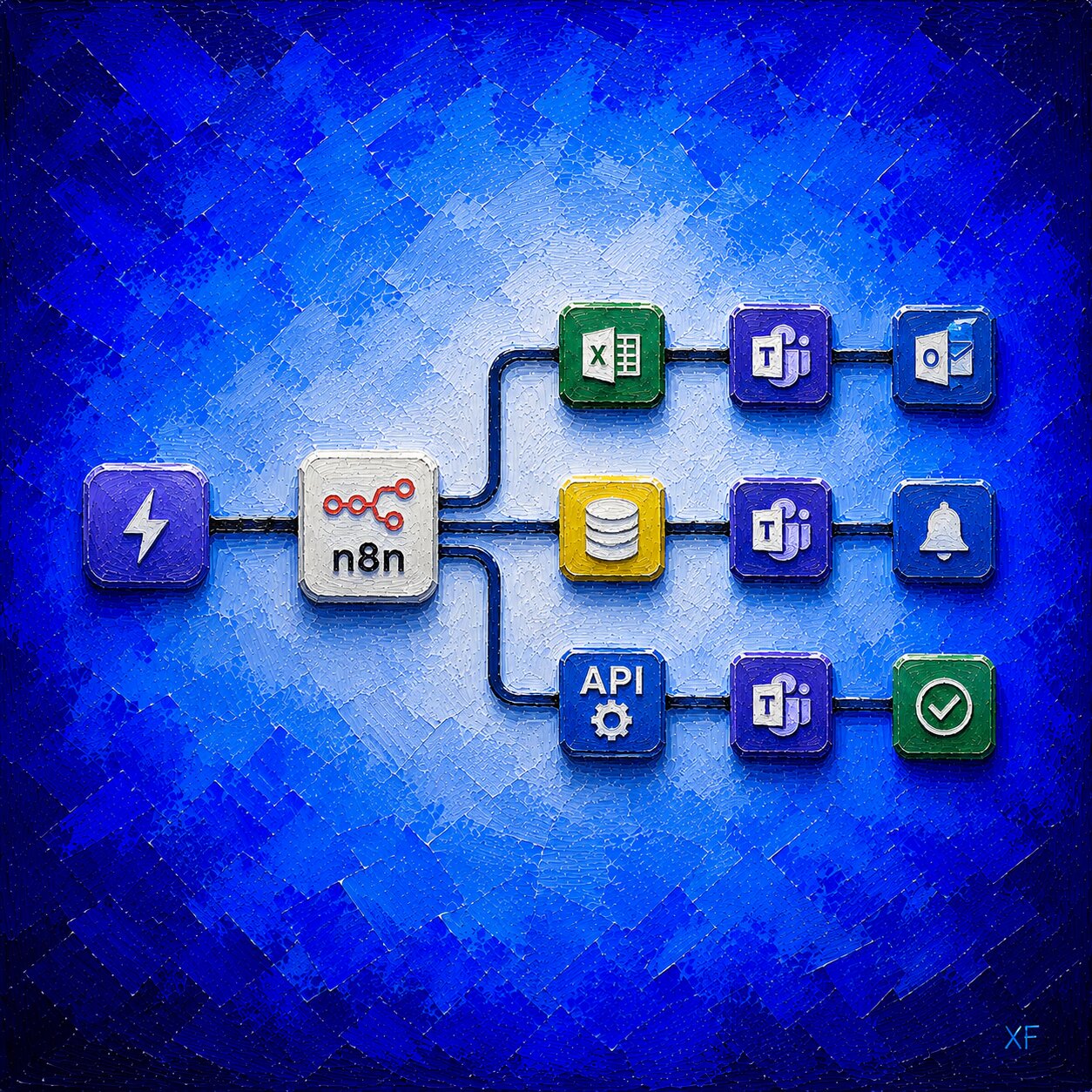
- undocumented scripts and n8n workflows
- email threads
- manual fixes
- tribal knowledge
The ERP remains alive.
Operationally, the business moves elsewhere.
Nobody officially planned this.
No leadership team gathers in a boardroom and says:
“Today we begin building undocumented operational chaos.”
It happens gradually.
One workaround at a time.
One survival decision at a time.
One “we’ll improve this later” moment at a time.
Why smart companies still build duct tape workflows
This is not stupidity.
And it is usually not laziness either.
Real companies evolve faster than their systems do.
A distributor adds new suppliers faster than integrations are updated.
Finance needs reporting the ERP cannot provide cleanly.
Operations teams create exports because the official workflow takes too long.
Sales starts using external tools because the existing process creates friction.
People adapt because business pressure does not wait for perfect systems.
Most workaround systems are built by competent people trying to keep operations alive.
That is what makes them dangerous.
They often begin as intelligent decisions.

Temporary fixes rarely stay temporary
One company exports inventory every morning because supplier data arrives broken every Monday.
Another manually validates orders because nobody fully trusts the integration anymore.
Another depends on a single employee who understands a legacy workflow built years ago by someone who already left the company.
Everyone knows these situations exist.
Almost nobody documents them properly.
And over time, the workaround becomes operational culture.
That is much harder to replace than software.
The moment trust leaves the system
This is where operational problems become expensive.
Not when systems fail dramatically.
Quiet operational decay is usually far more dangerous.
The ERP technically works.
The dashboard technically exists.
The integration technically runs.
But people stop trusting outputs.
That changes behavior immediately.
Teams begin manually verifying data.
Managers build shadow reporting in Excel.
Approvals move into Slack threads.
Employees maintain personal “safe” versions of reports.
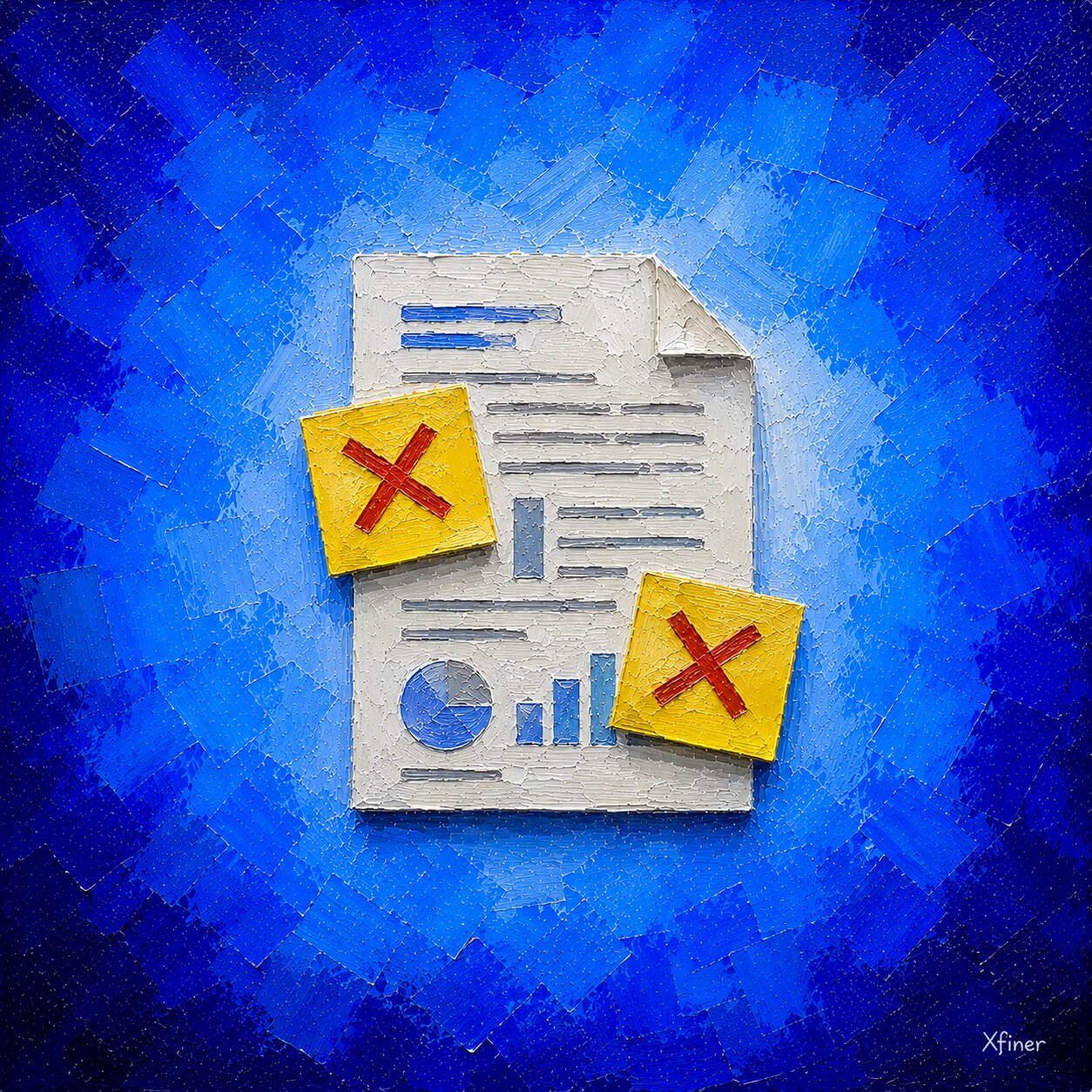
One company printed reports every morning because nobody trusted the live dashboard anymore.
The system still had the data.
Trust had already left the building.
“The integration worked. The trust around it collapsed.”
Why Xfiner created Duct Tape Files
At Xfiner, we kept seeing the same operational patterns repeat across industries, countries, and company sizes.
Different businesses.
Different sectors.
Different ERPs.
The same duct tape.
A spreadsheet quietly becoming the real operational system.
An integration nobody wants to touch.
A workflow dependent on one person.
Three employees fixing supplier imports manually every morning before 9:00.
The details changed.
The operational behavior did not.
That became the foundation for Duct Tape Files.
Not as a series designed to embarrass companies.
And not as another AI hype publication pretending operations are clean and simple.
The goal is operational honesty.
Because most operational content online feels fictional.
Everything looks organized. Smooth. Automated. Perfectly connected.
Real operations rarely look like that.
Real operations contain:
- uncertainty
- workarounds
- undocumented ownership
- invisible dependencies
- political friction
- survival behavior
- accumulated technical debt
- exhausted teams quietly adapting every day
Duct Tape Files exists to make those realities discussable.
Calmly.
Honestly.
Without pretending complexity disappeared.
The hidden financial cost of operational duct tape
Most operational inefficiencies never appear as dramatic disasters.
They leak quietly.
Through:
- duplicated work
- delayed approvals
- manual corrections
- operational hesitation
- dependency on specific employees
- poor visibility
- fragmented tooling
- recurring verification work
The damage accumulates slowly enough that companies normalize it.
That normalization becomes dangerous.
In many cases, internal tools vs hiring is not a theoretical debate, it is where operational ROI gets decided.
Because eventually nobody remembers what efficient operations were supposed to feel like.
“Nobody owned the workflow anymore. People only owned their workaround.”

The cost rarely appears on a single invoice
Instead, it appears through:
- slower decisions
- exhausted middle managers
- reporting delays
- reduced trust
- operational drag
- scaling resistance
- onboarding complexity
- avoidable human dependency
Most companies can feel this friction long before they can measure it precisely.
That is usually when leadership starts asking deeper questions.
Why AI alone will not solve this
Many companies currently rush toward AI while carrying years of operational duct tape underneath.
That creates another layer of risk.
Because AI attached to broken workflows does not magically create clarity.
Sometimes it accelerates confusion.
A broken workflow with AI attached to it is still a broken workflow.
Sometimes faster.
The companies seeing meaningful operational improvements today are usually not the ones chasing the loudest trends.
They are the ones finally addressing:
- fragmented workflows
- outdated integrations
- operational UX problems
- ownership confusion
- reporting friction
- disconnected systems
- unnecessary manual work
Then AI becomes useful.
Because clarity scales better than chaos.
What healthier operations actually look like
Healthier operations rarely feel dramatic.
Usually they feel calmer.
People stop building personal backup systems.
Teams trust dashboards again.
Approvals happen visibly.
Data moves without manual babysitting.
Employees stop fearing old integrations.
Operations become easier to understand.
Not perfect.
Just healthier.
This is also where Xfiner naturally found its role.
Across projects delivered across 29+ countries, the pattern stays the same: cleaner systems beat bigger workaround stacks.
Not replacing entire operational ecosystems.
Not selling fantasy transformation stories.
But helping companies improve the layers between systems:
- integrations and automation
- operational workflows
- internal tooling
- AI-enhanced automation
- ERP-connected apps and Microsoft Business Central integration
- operational interfaces people actually want to use
Because that invisible operational layer often determines whether a company scales smoothly or slowly suffocates under accumulated friction.
Final thoughts
Most operational disasters do not begin with failure.
They begin with people adapting quietly for too long.
The spreadsheet that saved time once.
The export process that became permanent.
The undocumented fix nobody questioned anymore.
Companies rarely collapse because of one catastrophic operational decision.
More often, they slowly accumulate invisible friction until daily work becomes heavier than it should be.
Duct Tape Files was created to explore those realities honestly.
Because underneath many “digital transformation” conversations is something much simpler:
People are tired.
Tired of duplicated work.
Tired of disconnected systems.
Tired of workflows that technically function while operationally exhausting everyone around them.
And quietly, many companies are ready for something better.
Not perfection.
Just less duct tape.


.png)



.jpg)

.jpg)



.png)

.png)

.jpg)

.png)

.png)