What a modern API integration development company actually does in 2026
.jpg)
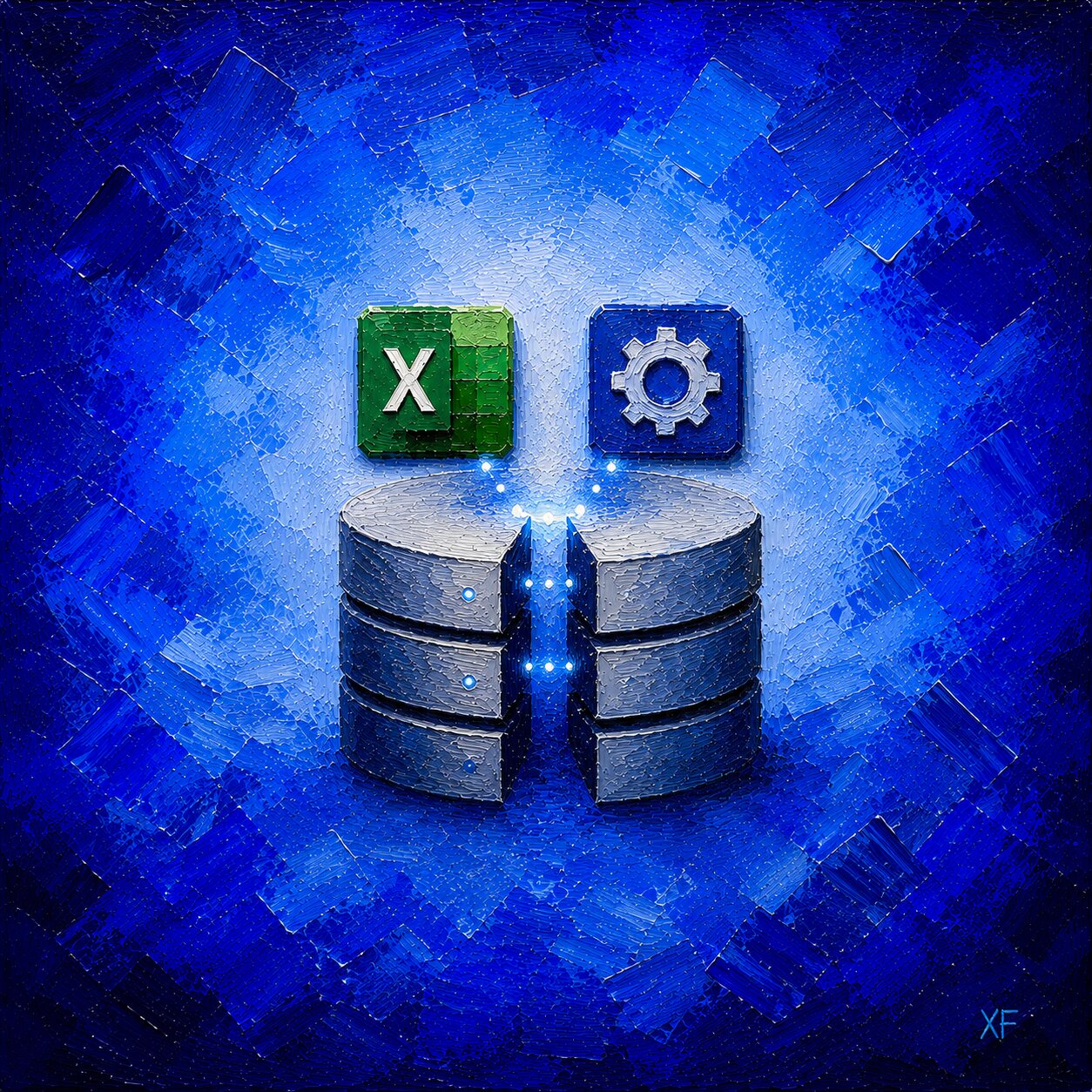


Most people think an API integration development company connects software.
Technically, that's true.
But it is also a bit like saying an architect draws walls or a chef moves ingredients around a kitchen. The description is correct, yet it completely misses where the real value comes from.
Over the past decade, I have spent a significant amount of time working with operational teams, internal systems, ERP environments, customer portals, workflow automations, business applications, and people trying to make all of those things work together. One observation keeps repeating itself.
The companies struggling most rarely suffer from a lack of technology.
More often, they suffer from a lack of operational clarity.
The ERP exists. The CRM exists. The reports exist. The dashboards exist. The integrations exist. Yet employees continue exporting data into spreadsheets, approvals happen through Teams, reporting lives in parallel files, and somebody quietly becomes the unofficial bridge between multiple departments.
At first glance, it looks like a technology problem.
In reality, it is usually a workflow problem.
And that distinction changes how a modern API integration services company should approach its work.
Most businesses don't need another system
A few years ago, software vendors convinced businesses that every operational challenge required another platform. Another subscription. Another dashboard. Another module.
Many companies followed that advice.
Today, it is not unusual to see organizations running an ERP, a CRM, a project management platform, a customer support system, a reporting platform, an e-commerce platform, multiple communication tools, and a collection of spreadsheets quietly holding everything together in the background.
Yet despite all this technology, operational friction often remains stubbornly present.
People still wait for approvals.
People still manually verify data.
People still export information between systems.
People still create workarounds.
This is one of the reasons I believe many businesses do not need another system.
What they need is a better conversation between their existing systems.
That conversation is often where APIs enter the picture.
But before connecting systems, it is worth understanding why the conversation broke down in the first place.
The API is rarely the difficult part
One of my favorite ways to explain APIs is through a restaurant analogy.
Imagine sitting in a restaurant. You place an order. The kitchen prepares the food. A waiter brings it to your table.

The waiter is important, but nobody visits the restaurant because the waiter carried food from one location to another. People care about the outcome. They care about receiving the right meal at the right time in a pleasant and reliable way.
APIs work in a similar fashion.
They transport information between systems. They allow software to communicate. They move data from one place to another. They trigger actions and synchronize workflows.
The API is the waiter.
The workflow is the dining experience.
Unfortunately, many integration projects become obsessed with the waiter while completely ignoring the experience.
Businesses often arrive saying they need an API integration. After a few conversations, it becomes clear that what they really need is visibility, fewer manual steps, faster approvals, cleaner reporting, or a workflow that employees actually enjoy using.
The technical connection is often the simplest part of the project.
Understanding the business is usually much harder.
Why user psychology matters more than most people think
This is where traditional integration projects often go wrong.
The assumption is that once systems are connected, people will naturally use them.
Reality is rarely that simple.
Human beings, including myself, consistently choose the path of least resistance. If a workflow feels slow, people find shortcuts. If a dashboard feels unreliable, people build their own reports. If an approval process becomes frustrating, decisions start happening in Teams messages, phone calls, or informal conversations.
None of this happens because employees are careless.
It happens because employees are trying to get work done.
One thing I have always found slightly strange is how much effort businesses invest into designing customer experiences while expecting employees to operate through workflows nobody would willingly design for customers.
Imagine launching an e-commerce store with confusing navigation, slow interactions, unclear feedback, and unreliable information. Nobody would accept that experience.
Yet internal operational systems often work exactly this way.
Then organizations wonder why adoption suffers, why spreadsheets survive, or why workaround culture emerges.
Good integrations acknowledge human behavior.
Great integrations are designed around it.
The spreadsheet is usually trying to tell you something
I have written before about spreadsheet dependency and workaround culture. The reason these topics continue appearing is because they reveal something deeper about operational reality.
Spreadsheets are rarely the root cause.
They are symptoms.

When teams repeatedly create spreadsheets around an ERP, a CRM, or an operational platform, they are usually compensating for something. Perhaps visibility is lacking. Perhaps reporting feels incomplete. Perhaps approvals take too long. Perhaps the workflow itself was never properly designed.
A modern API integration development company should be curious about these signals.
Instead of asking how to eliminate spreadsheets, it should ask why the spreadsheet appeared.
The answer often leads directly to the highest-value improvement opportunity.
What n8n gets right
One reason platforms like n8n have become increasingly popular is that they reflect how modern businesses actually operate.
Historically, many integrations disappeared into black boxes. A developer built them, documentation slowly aged, and eventually nobody wanted to touch the workflow because nobody fully understood it.
That approach does not scale well.
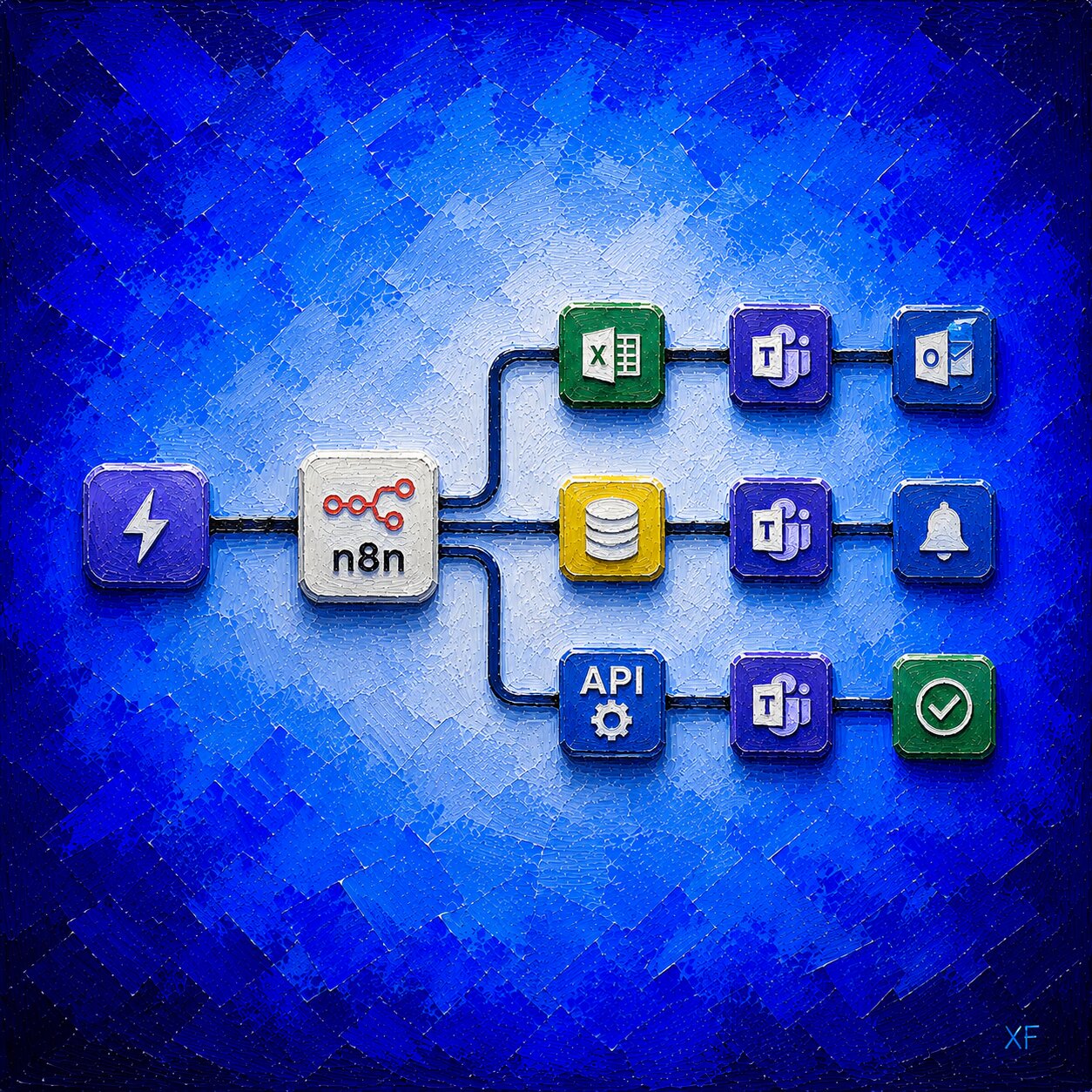
What makes n8n interesting is not simply automation. It is visibility. Workflows become easier to understand. Teams can see how data moves. Operational logic becomes more transparent. Changes become easier to discuss and document.
This visibility is one reason businesses ranging from startups to enterprise organizations have embraced workflow orchestration platforms.
The conversation is no longer simply about connecting software.
It is about making operations understandable.
That distinction matters.
Interestingly, even large enterprise ecosystems increasingly recognize the value of orchestration, workflow visibility, and operational flexibility. The market is slowly shifting away from asking which system to buy and toward asking how existing systems can work together more effectively.
That is a much more useful conversation.
AI changes speed, not responsibility
The rise of AI has dramatically changed software development, automation, and integration projects.
Today, it is possible to prototype portals, internal tools, dashboards, workflow automations, and operational applications much faster than before. Development cycles are shorter. Testing happens earlier. Iteration becomes easier.
This is genuinely exciting.
However, AI also creates a dangerous misconception.
Many people assume faster development means less planning.
In reality, the opposite is happening.
The faster implementation becomes, the more important thinking becomes.
The businesses generating the best results are often investing more time into discovery, system design, workflow mapping, documentation, operational planning, and user understanding. They know that a poorly designed workflow implemented quickly simply creates expensive confusion at greater speed.
At Xfiner, we increasingly see groundwork becoming one of the most valuable parts of any integration project. Understanding operational bottlenecks before development begins often determines whether the final solution succeeds.
Good architecture accelerates execution.
Poor architecture accelerates mistakes.
What a modern API integration development company is really selling
When people hear the term "API integration services company", they often imagine developers connecting systems.
That certainly happens.
But I think the real value is something else entirely.
A modern integration company is not selling APIs.
It is selling clarity.
It is selling visibility.
It is selling confidence.
It is selling operational simplicity.
It is helping businesses reduce the invisible friction that accumulates between systems, departments, approvals, reports, vendors, customers, and employees.
The API is simply one mechanism used to achieve that outcome.
The workflow is where the value lives.
Why this matters for leadership teams
For C-suite leaders, operational friction rarely appears as a single dramatic problem.
Instead, it arrives quietly.
Margins slowly erode. Reporting becomes harder to trust. Teams spend increasing amounts of time coordinating manually. Employee frustration grows. Processes become dependent on specific individuals. Visibility weakens.

The business still functions.
But it becomes heavier.
That operational heaviness carries a cost.
Sometimes the cost appears financially.
Sometimes it appears through slower growth, delayed decisions, employee turnover, or missed opportunities.
Either way, the impact is real.
The organizations that improve operational workflows consistently tend to create advantages that compound over time. Faster decisions. Better visibility. Happier teams. More confidence. Less operational stress.
Those outcomes are far more valuable than simply having another integration.
Why businesses choose Xfiner
At Xfiner, we rarely begin projects by discussing APIs.
We begin by understanding how people work, how decisions are made, where workflows slow down, and where operational friction quietly accumulates. We discuss teams, bottlenecks, business realities, user behavior, and the often invisible processes that keep organizations moving every day.
Over the years, we have delivered projects across 29+ countries and built a showcase of 50+ featured projects spanning operational systems, internal tools, portals, digital products, customer experiences, and business-critical workflows. Along the way, our work has earned 11 international design awards, not because we focused on aesthetics alone, but because great design starts with understanding people. Human behavior, psychology, trust, usability, motivation, and decision-making often determine the success of a system long before the technology does.

Our background combines UX design, system design, operational thinking, internal tools, portals, automation, AI-assisted workflows, and business systems. That combination allows us to approach integrations differently. We do not see APIs as isolated technical components. We see them as part of a larger operational experience that should make work simpler, faster, clearer, and more enjoyable for the people using it every day.
The goal is not connecting software for the sake of connecting software. The goal is helping businesses operate with greater clarity, efficiency, visibility, and confidence.
Sometimes that involves n8n. Sometimes custom software. Sometimes a portal, an internal operational application, workflow redesign, or a carefully designed layer on top of an existing ERP or CRM.
The technology follows the need.
Not the other way around.
Final thoughts
I genuinely believe this is one of the most exciting times in history to improve operations.
Businesses have access to better APIs, better infrastructure, better automation platforms, better AI capabilities, and better development workflows than ever before. The barriers to building meaningful operational improvements continue falling.
Yet the biggest opportunities still tend to come from understanding people rather than technology.
The organizations that understand how their teams actually work will almost always outperform those that focus only on software.
Technology matters.
Engineering matters.
APIs matter.
But understanding the workflow matters more.
Thank you for reading.
If your organization is navigating disconnected systems, workflow bottlenecks, spreadsheet dependency, reporting challenges, or operational complexity, I would be happy to discuss it through a Duct Tape Talk. No sales presentation. No pressure. Just an honest conversation about operations, systems, and opportunities hiding between them.
Lauri
Founder, Xfiner


.png)



.jpg)

.jpg)



.png)

.png)

.jpg)

.png)

.png)